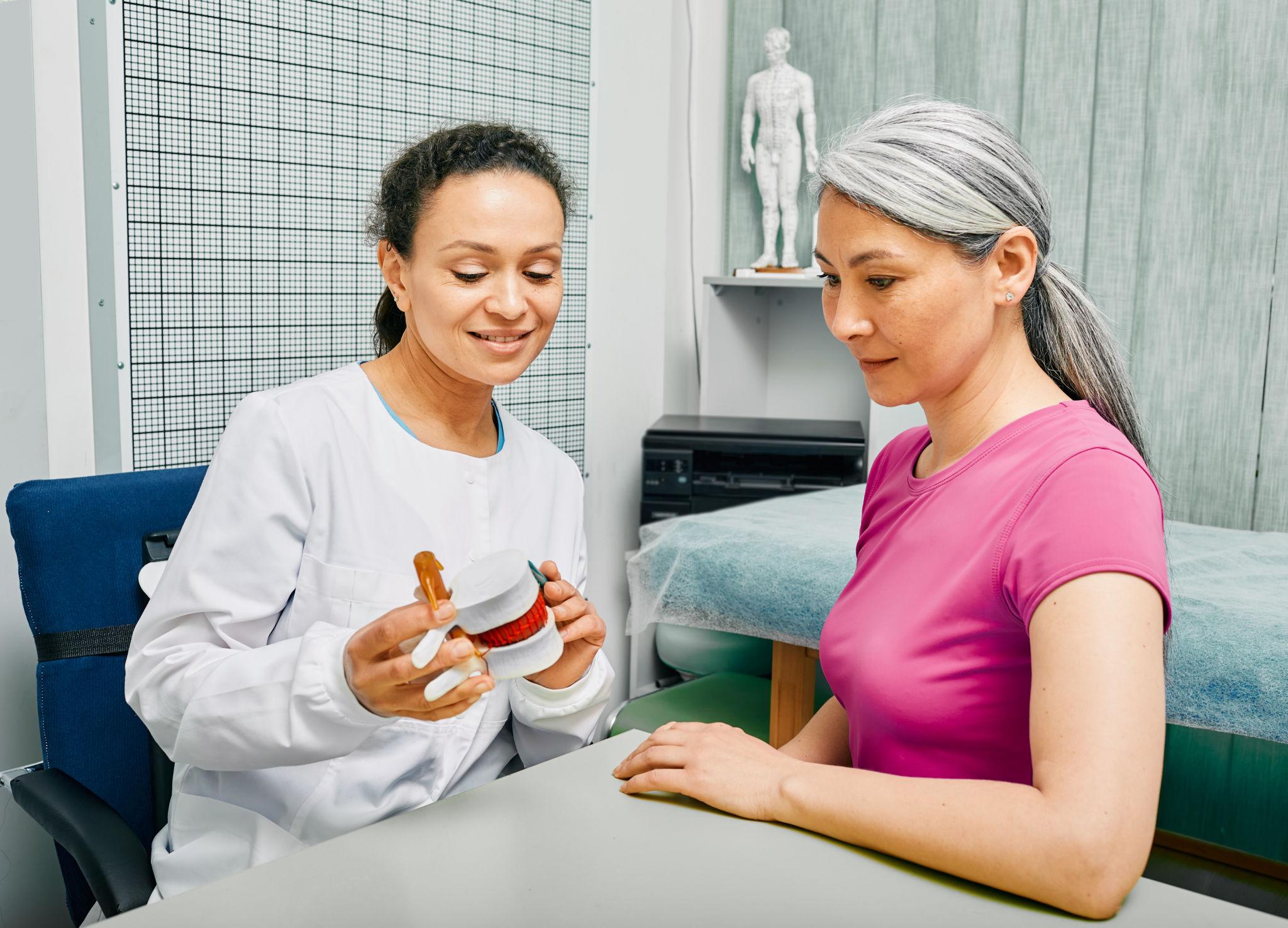
Together, DOs and MDs enhance the state of health care available in America.
If you’re like most people, you’ve been going to a physician ever since you were born and perhaps were not aware whether you were seeing a DO (osteopathic physician) or an MD (allopathic physician). You may not even be aware that there are two types of complete physicians in the United States. The fact is that both DOs and MDs are fully qualified physicians licensed to prescribe medication and perform surgery. Is there any difference between these two kinds of physicians? Yes. And no.
DOs and MDs belong to a separate yet equal branch of American medical care. It is the ways that DOs and MDs are different that can bring an extra dimension to your family’s health care.L
SIMILARITIES
Applicants to both DO and MD medical colleges typically have four-year undergraduate degrees with an emphasis on scientific courses.
Both DOs and MDs complete four years of basic medical education.
After medical school, both DOs and MDs obtain graduate medical education through such programs as internships and residencies. This training typically lasts three to six years and prepares DOs and MDs to practice a specialty.
Both DOs and MDs can choose to practice in any specialty area of medicine-such as pediatrics, family practice, psychiatry, surgery or obstetrics.
DOs and MDs must pass comparable examinations to obtain state licenses.
DOs and MDs both practice in fully accredited and licensed health care facilities.
DIFFERENCES
Osteopathic medical education places a strong emphasis on primary medical care. Osteopathic physicians are trained to be complete physicians first, then as specialists if they choose.
Osteopathic Diagnosis Osteopathic physicians receive specialized training about the musculoskeletal system. This helps them to better understand the ways an injury or illness can affect different regions of the body allowing a “holistic” approach to medical care.
Osteopathic Manipulative Treatment (OMT) Osteopathic physicians are also trained to use OMT, a manual medicine technique. Through the use of OMT, the osteopathic physician can assist in restoring musculoskeletal balance which assists in promoting the body’s natural healing ability.
Osteopathic physicians are taught to emphasize prevention of injury or illness in addition to treating current medical problems.
OSTEOPATHIC FACTS
Every year over 100 million physician visits are made to a DO
DOs account for 5.5% of all US physicians and over 15% of all military physicians with over 60,000 DOs in the United States.
65% of all DOs practice primary care, many in rural communities.
There are currently 25 schools of osteopathic medicine in the United States with enrollment of over 13,400 and over 2,700 students graduating each year.
HISTORY OF OSTEOPATHIC MEDICINE
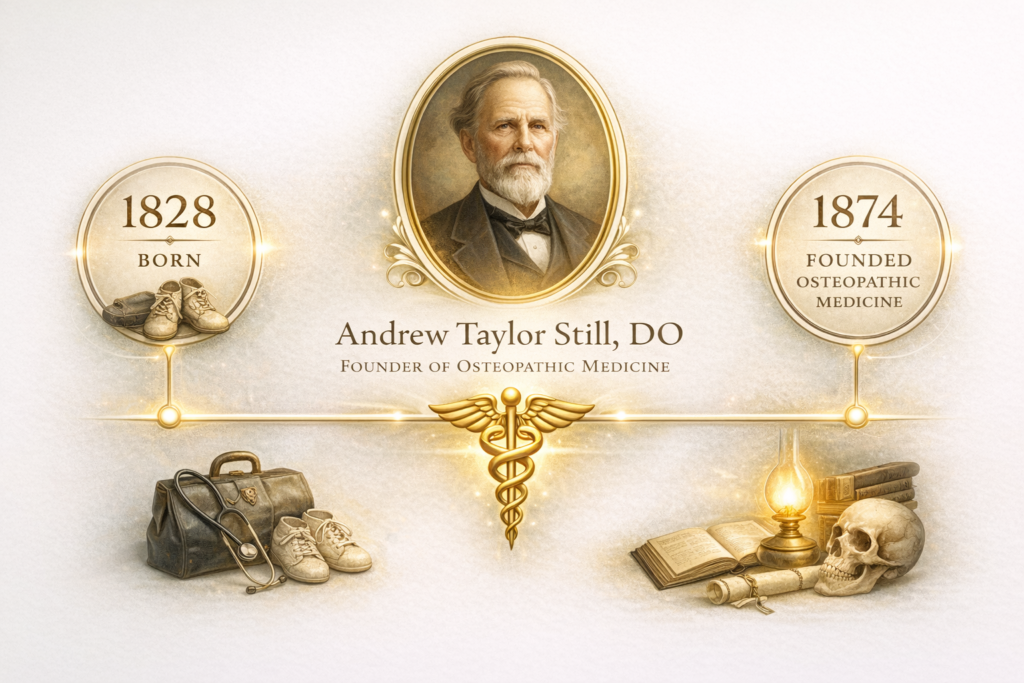
1828
August 6, 1828
Founder Taylor Still, DO, is born
Still was the son of a Methodist minister-physician, Abram Still, whose circuit-riding ministry brought the family through Tennessee, Missouri, and Kansas. Apprenticed to his father, Andrew gained practical medical training and firsthand exposure to frontier health challenges. His early experiences treating Shawnee communities and serving as a Union soldier during the Civil War shaped his skepticism toward conventional 19th-century medicine.
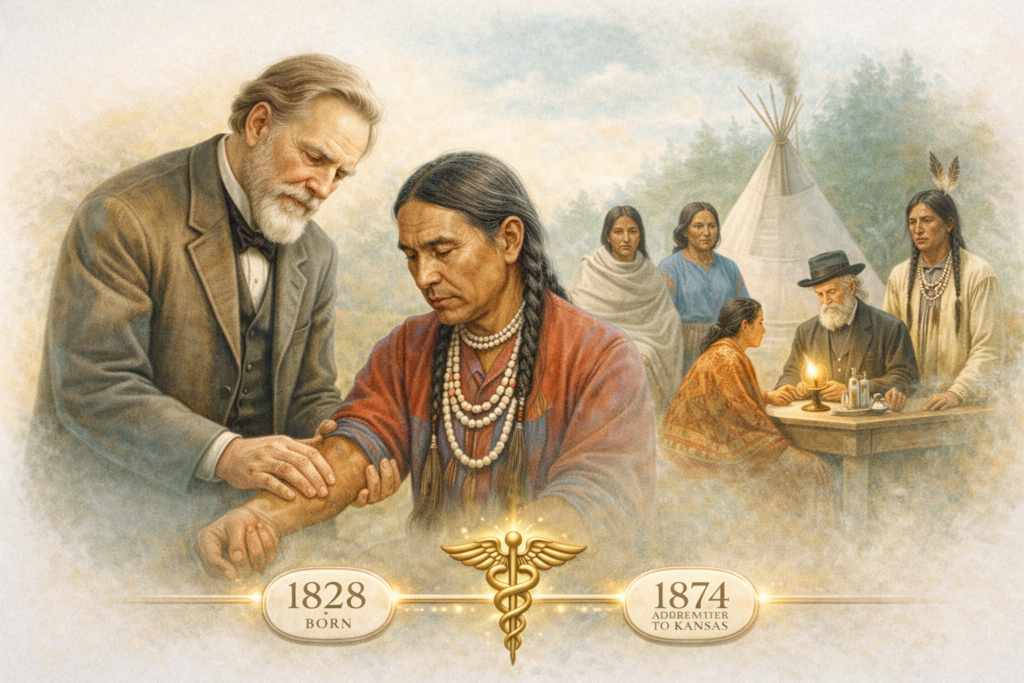
1850
Dr. Still moves to Kansas to help his father provide care for Native Americans.
1857
Dr. Still is elected Kansas wate Legislature.
1860
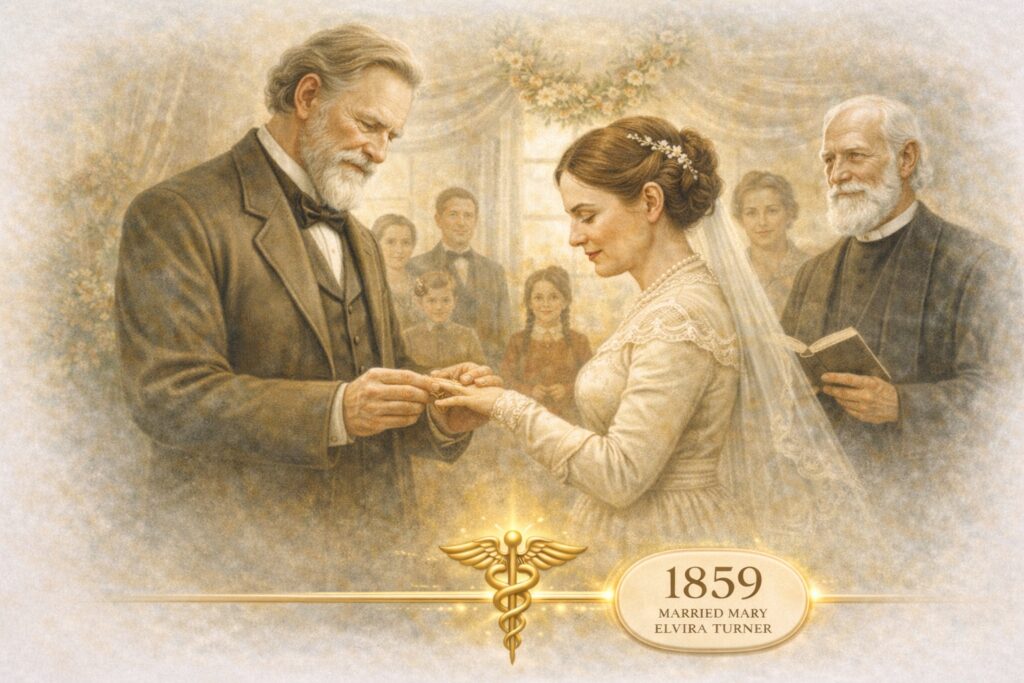
Dr. Still marries Mary Elvira Turner, known as the mother of osteopathic medicine.
1861
Dr. Still serves in the Union Army and is distraught by the medical care and effects of opium
1864
Four children of Dr. Still's die within four weeks, prompting him to rethink medicine.
June 22 1874
After years of study and research, Dr. Still practices what would become osteopathic medicine.
1875
Dr. Still moves to Kirksville, Missouri to work as a traveling physician.
1885
Dr. Still's Tentiation arows and he coins the term "osteopathy"
1892
ATSU opens as the American School of Osteopathy (ASO) in Kirksville, with A.T. Still, DO as the first president
1894
The Journal of Osteopathy is launched in Kirksville and prints until 1954.
1897
Missouri legalizes asicanalnic medicine as a profession.
1901
The Journal of the American Osteopathic Association JADA debuts in September.
December 12, 1917
Dr. Still dies at age 89 in Kirksville, Missouri.
1922
The Andrew Taylor Still College of Osteopathy and Surgery (ATSCOS), is founded by George M. Laughlin, DO.
1951
U.S. Congress amends the Social Security Act to include osteopathic physicians.
1967
DO graduates participate in the military residency match for the first time.
1973
The DO degree Is recognized in all 50 states and the District of Columbia.
2001
Louisiana hacomes the 50th state to accept the COMLEX examination.
2007
Practice rights granted to osteopathic physicians in 45 countries.
2014
Transition to a single accreditation system for racidences is announced.
2016
The number of DOs in the U.s. surpasses 100,000.
201
Osteopathic medicine celebrates its 125th Anniversary!
Subscribe to the newsletter to receive the latest informations and news about Kallyas Business Conference.
CONNECT WITH MAOP
Please fill out this form and we will get back to you as soon as possible
About Us: Who We Are & What We Do
MAOP Celebrates 30 Years of Supporting Maryland’s Osteopathic Physicians
Established in 1993, MAOP is proud to celebrate and serve the osteopathic physicians and physicians-in-training in the state of Maryland. We are a non-pro t organization dedicated to helping physicians grow professionally throughout their careers by providing excellent continuing medical education, by advocating for them and their patients at the national level and by providing practice management information and skills necessary for success in today’s ever-changing healthcare climate.
MAOP serves members in all modes of practice and specialties representing the patients of Maryland. We know that in today’s economic climate, physicians are being assailed from many directions. Our goal is to provide our members with the necessary support so that they can surpass the challenges and continue to run successful medical practices.
MAOP Celebrates 30 Years of Supporting Maryland’s Osteopathic Physicians
Established in 1993, MAOP is proud to celebrate and serve the osteopathic physicians and physicians-in-training in the state of Maryland. We are a non-pro t organization dedicated to helping physicians grow professionally throughout their careers by providing excellent continuing medical education, by advocating for them and their patients at the national level and by providing practice management information and skills necessary for success in today’s ever-changing healthcare climate.
MAOP serves members in all modes of practice and specialties representing the patients of Maryland. We know that in today’s economic climate, physicians are being assailed from many directions. Our goal is to provide our members with the necessary support so that they can surpass the challenges and continue to run successful medical practices.