
✨Student Spotlight on Garry Anthony Graham II✨
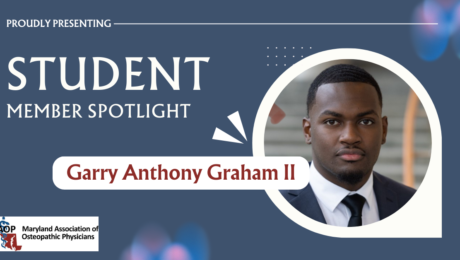
Spotlight
Tony, a first-year student at Meritus College of Osteopathic Medicine, brings a strong background in public health, mentorship, and community service to the Student Advisory Board.
Name
Garry Anthony Graham II, OMS-I
Medical School & Graduation Year
Meritus College of Osteopathic Medicine – Class of 2029
Areas of Interest
Undecided; currently exploring Psychiatry, Internal Medicine, Surgery, Anesthesiology, and Radiology. His primary goal is to become a compassionate physician who advocates for patients by continuously expanding his knowledge and seeking out real-world clinical experiences.
Leadership & Service
-
Student Advisory Board Member (MAOP)
-
Senator, United Student Movement, Oakwood University – represented the School of Arts and Sciences
-
Member, Minority Association of Pre-Medical Students (MAPS)
-
Volunteer, Helping Hands and church Youth Ministries – community food distribution, events, and youth mentorship
-
Basketball Coach for boys ages 12–17, teaching teamwork, discipline, and resilience
-
Mentor and Tutor, Oakwood University REACH Program and The Literacy Factory
Academic & Professional Preparation
-
MPH in Epidemiology, Columbia University – Certificate in Health and Human Rights
-
Coursework in Public Health Interventions, Health Systems, Environmental Justice, and Global & Developmental Perspectives
-
Academic foundation rooted in equity, advocacy, and leadership
-
Volunteer and shadowing experience at Harlem Hospital and NYC Health + Hospitals North Central Bronx, gaining exposure to the challenges faced by underserved patients
Community Involvement
-
Mentor and tutor supporting literacy and academic confidence in children
-
Active engagement in service projects including clothing drives, soup kitchens, and educational outreach
-
Plans to begin volunteering with the Boys and Girls Club in Hagerstown to continue mentoring youth and supporting community-based initiatives
Why I Serve on the Student Advisory Board
“I want to be more than just a medical student. I want to be a voice, an advocate, and a connector for my peers. The future of medicine will be shaped by those who are willing to step forward, listen deeply, and fight for change—and I am ready to be one of those voices. My leadership and mentorship experiences have shown me that real impact happens when people unite behind a shared vision. On the Board, I hope to help amplify student voices, remove barriers, and create initiatives that leave a lasting impact on the osteopathic student experience.”
Unique Perspective
Garry brings the perspective of a Black medical student of Caribbean descent whose journey has been shaped by resilience, advocacy, and service. His background in public health, community engagement, and student leadership gives him the ability to approach challenges with empathy, cultural sensitivity, and a strong commitment to equity.
What He Hopes to Accomplish
-
Strengthen mentorship opportunities, particularly for underrepresented and first-generation medical students
-
Amplify the student voice in decision-making, with a focus on wellness, professional development, and inclusivity
-
Foster a culture of collaboration and opportunity that benefits both current and future osteopathic medical student
- Published in Student Member Profile
✨Student Spotlight on Archita Padmanabhan✨
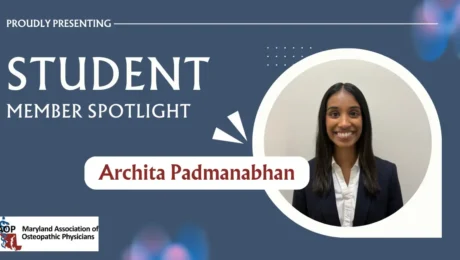
Name
Archita Padmanabhan, OMS-I
Medical School & Graduation Year
Meritus School of Osteopathic Medicine – Class of 2029
Areas of Interest
Emergency Medicine, Cardiology, Neurology
Leadership & Service
-
Student Advisory Board Member (MAOP)
-
Former State Parliamentarian (2017–2018) and Active Alumni Member, California HOSA: Future Health Professionals
-
Former Vice President of Programming, Phi Delta Epsilon Medical Fraternity – NJ Beta Chapter (Rutgers University)
-
AMSA Member (undergraduate; supporting new chapter development at MSOM)
-
Volunteer at Crisis Text Line, Medshare (CA), and various community health initiatives
Clinical & Research Experience
-
Patient Monitor, Emergency Department, Robert Wood Johnson University Hospital, New Brunswick, NJ (2021–2022)
-
Medical Assistant and Trainer, Clinilabs (Clinical Research Site) (2022–2023)
-
Clinical Research Coordinator I, Clinilabs (2023–2025), managing 8 concurrent studies across multiple specialties
-
Coursework in Systems Physiology, Immunology, Advanced Cell Biology, Psychology, and Sociology for Medicine and Healthcare
Campus & Community Involvement
-
Volunteer at Abyssinian Baptist Church Food Share, Habitat for Humanity, and Medshare
-
Mentor and advocate through Crisis Text Line, providing support to individuals in need
-
Active participant in building new student-led organizations at MSOM to enhance medical student engagement
Why I Serve on the Student Advisory Board
“As a member of MSOM’s inaugural class, I’m excited to help shape a strong foundation for our osteopathic student community in Maryland. The SAB’s mission to advocate for students, connect them with resources, and strengthen relationships with physicians aligns perfectly with my own goals. I’m passionate about creating programming that encourages students to explore their interests, connect with mentors, and engage with Maryland’s diverse communities.”
Unique Perspective
Archita brings experience from leadership roles in pre-health organizations and clinical research. Her ability to connect student interests with organizational missions allows her to design impactful programming and advocate effectively. She has led teams, managed complex studies, and worked in diverse healthcare environments, giving her a practical understanding of collaboration, communication, and problem-solving.
What She Hopes to Accomplish
-
Expand networking opportunities across Maryland so students can explore specialties and community needs
-
Promote student engagement in statewide wellness initiatives and advocacy
-
Strengthen connections between medical students, physicians, and community partners to support osteopathic values
- Published in Student Member Profile
🌟 Student Spotlight on Ianna Pirozzi🌟
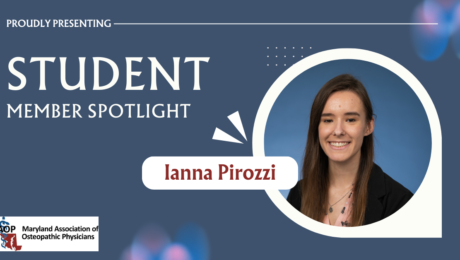
Name
Ianna Pirozzi, OMS-IV
Medical School & Graduation Year
Lake Erie College of Osteopathic Medicine (LECOM) – Class of 2026
Areas of Interest
Anesthesiology, Internal Medicine
Leadership & Service
-
Student Advisory Board Member (MAOP)
-
Events Coordinator, Anesthesiology Club at LECOM
-
Member of Internal Medicine Club and ACOS-MSS (Surgery Club)
-
Peer Advisor and member of LECOM Mentoring Club
-
Former Chair of Special Events, Villanova University Campus Activities Team
-
Editor-in-Chief of Layout, POLIS Literary Magazine
-
Diversity Ambassador, Villanova Department of Chemistry
-
Promoter Intern for the Ignatian Solidarity Network and Ethix Merch
Clinical & Research Experience
-
Completion of all core clinical rotations: Surgery, Geriatrics/OPP, OB-GYN, Family Medicine, Pediatrics, Psychiatry, Internal Medicine, and Ambulatory Medicine
-
Previous perioperative surgical support technician at R Adams Cowley Shock Trauma Center, University of Maryland Medical Center
-
Pre-medical shadowing at University of Maryland Medical Center (UMMC) and Greater Baltimore Medical Center (GBMC)
-
Research background with contributions to manuscripts and public health programming
-
Completed COMLEX Levels 1 & 2 and USMLE Steps 1 & 2
Campus & Community Involvement
-
Active volunteer with Schoolhouse Science and The Joy of Sox
-
Habitat for Humanity and local community outreach volunteer
-
Committee Member, Villanova COVID-19 Events Management Team
-
Organizer of campus-wide initiatives such as CATchella Welcome Event, Merry Christmas Villanova Week, and Basketball Game Watches
-
Service through bilingual public health education workshops and mentorship programs
Why I Serve on the Student Advisory Board
“As an OMS-IV preparing for residency, I’ve reflected deeply on my path in medicine and realized I flourish in advocacy and mentorship. Serving on the Student Advisory Board allows me to combine my passions for advocacy, leadership, and collaboration while supporting my peers and the osteopathic profession. I hope to build meaningful connections, expand mentorship opportunities, and represent student perspectives at the state level—especially as Maryland’s osteopathic community continues to grow.”
- Published in Student Member Profile
🌟 Student Spotlight on Lavinia Harrison ✨
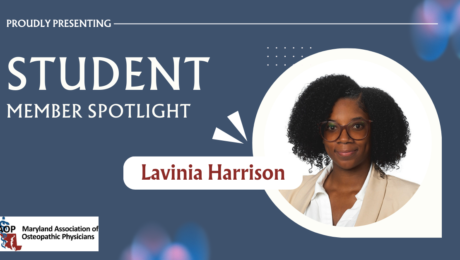
Name
Lavinia Harrison, OMS-I
Medical School & Graduation Year
Meritus School of Osteopathic Medicine – Class of 2029
Areas of Interest
Family Medicine
Leadership & Service
- Student Advisory Board Member (MAOP)
- Program Lead, Center of Excellence & REACH-HEI, Geisinger Commonwealth School of Medicine (2021–2024)
- Community Impact Grant Reviewer, Pocono Mountains United Way
- STEM Program Director, Building 21 High School
- Volunteer mentor and leader in multiple community-based outreach and service initiatives
Clinical & Research Experience
- Designed and implemented mentorship and pipeline programs for students from underrepresented backgrounds in medicine
- Developed and evaluated medical mentoring curriculum emphasizing cultural competence and leadership
- Organized physician shadowing opportunities, workshops, and health education sessions
- Research in health disparities and child death review policy during MPH training
- Scribe and research coordinator in clinical and academic settings
Campus & Community Involvement
- Volunteer with Abyssinian Baptist Church Food Share, “We Bloom” Annual Event, Broken but Healing Mentorship, and Habitat for Humanity
- Service with St. Christopher’s Child Life Department and Acumen Dental Community Outreach
- Organizer of bilingual health education workshops, public health events, and Girls in Science Day, a county-wide initiative inspiring young women in STEM
Why I Serve on the Student Advisory Board
“I joined the Student Advisory Board to merge my passions for community engagement, policy, and mentorship within the osteopathic profession. I believe student voices play a powerful role in shaping the future of medicine, and I want to help ensure osteopathic medical education reflects compassion, diversity, and innovation.”
- Published in Student Member Profile
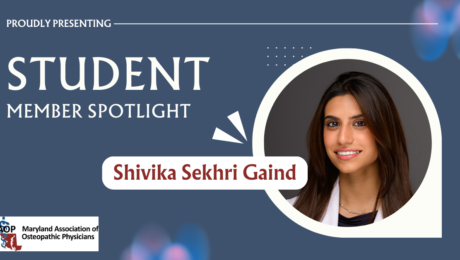
🌟 Student Spotlight on Shivika Sekhri Gaind ✨
Spotlight
Shivika, a third-year student at West Virginia School of Osteopathic Medicine, is passionate about student advocacy, clinical excellence, and mentoring peers while exploring General Surgery, OB/GYN, and Anesthesiology.
Name
Shivika Sekhri Gaind, OMS-III
Medical School & Graduation Year
West Virginia School of Osteopathic Medicine – Class of 2027
Areas of Interest
General Surgery, OB/GYN, Anesthesiology
Leadership & Service
- President, Student Advisory Board
- Region III Trustee, Student Osteopathic Medical Association (SOMA)
- Student Delegate, West Virginia Osteopathic Medical Association
- Co-founder, Smiles from Miles Away nonprofit
- Member of Omega Beta Iota and Sigma Sigma Phi honor societies
Clinical & Research Experience
- Clinical rotations across WVSOM Sitewide Campus
- Research in exercise prescriptions, limonene-induced asthma, and neurobehavioral responses
- Clinical work as an Emergency Department scribe and cardiology medical assistant
Campus & Community Involvement
- Active member of the Surgery & Anesthesia, Emergency Medicine & Radiology, and OB/GYN Clubs
- Volunteer in hospice care, community tutoring, and nutrition outreach for children
Why I Serve on the Student Advisory Board
“I believe in the power of student-led change. My goal is to strengthen communication, equity, and support for students—especially during clinical years—while amplifying diverse perspectives in medical education.”
- Published in Student Member Profile
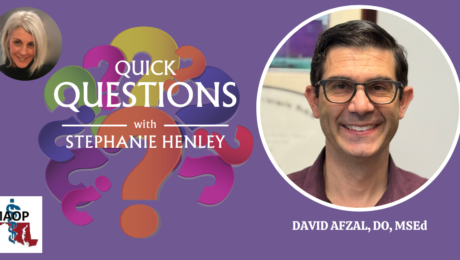
QQ with David Afzal
Q: What’s something people would be surprised to know about you?
A: I did martial arts for 20 years. I have my 2nd degree black belt in tae kwon do. I competed in a national championship once a long time ago.
Q: What is your favorite thing about your job?
A: Talking to patients. Getting to know patients.
Q: How did you make your first dollar?
A: I was a camp counselor at an outdoor ropes course camp.
Q: What is a skill that you would like to learn?
A: I’d like to learn classical guitar and how to speak Spanish.
Q: Name a place in the world you want to see.
A: The Northern Lights.
Q: What is your favorite way to unwind after a long day?
A: Playing with my kids. Spending time with my family.
Q: The best show you’ve binged in the last two years?
A: Ted Lasso
Q: If you could have a conversation with your younger self, what advice would you give?
A: Relax. It’s gonna be okay.
Q: If you could have dinner with any historical figure, who would it be and why?
A: Albert Einstein. I’m not as smart as him but we see the world in a similar fashion.
Q: What did you want to be when you were growing up?
A: Astronaut
Q: Beach or mountain vacation?
A: Beach
Q: Favorite or most-used app?
A: Other than Waze to get around, probably Instagram and Audible.
Q: Biggest pet peeve?
A: Chewing out loud.
Q: You won’t leave the house without …
A: My phone
Q: What would be your last meal?
A: Mexican with a margarita and dessert
Q: If you listen to only one song for the rest of your life on repeat, what would it be?
A: Louis Armstrong “It’s A Wonderful World”
Q: What book do you always recommend to people?
A: Project Hail Mary by Andy Weir
Q: What is your favorite part of MAOP?
A: Steph
Q: How long have you been involved with MAOP?
A: Since I was a medical student.
Q: Why is it important to you to be part of your state osteopathic medical association?
A: I like the sense of community.
- Published in Quick Questions
MAOP Letter from President
Dear Members,
I am honored to address you as the President of the Maryland Association of Osteopathic Physicians. As we embark on this journey together, I am filled with pride and enthusiasm for the incredible work that lies ahead.
Our society stands as a beacon of excellence in the field of osteopathic medicine, driven by the passion and dedication of each and every one of you. Together, we are committed to advancing healthcare, promoting research and fostering collaboration among osteopathic professionals worldwide.
In these challenging times, our collective strength and resilience have never been more important. As we navigate the complexities of modern medicine, let us remain steadfast in our commitment to innovation, compassion and patient-centered care.
I am inspired by the countless achievements of our members and the positive impact we continue to make in the lives of our patients and communities. Together, we have the power to shape the future of healthcare and drive meaningful change for generations to come.
As we move forward, I encourage each of you to actively engage with our society, share your expertise and participate in our events and initiatives. Together, we can achieve greatness and fulfill our shared mission of advancing the practice of osteopathic medicine and improving health outcomes for all.
Thank you for your unwavering dedication and support. Together, we will continue to elevate the standards of excellence in medicine and make a difference in the lives of countless individuals around the world.
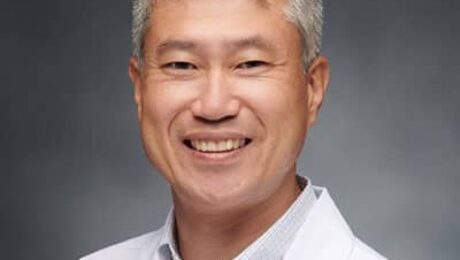
Taisei Suzuki, DO, MIPH, CCHP-CP, FAAFP
President
- Published in News
Beverly Maliner DO MPH
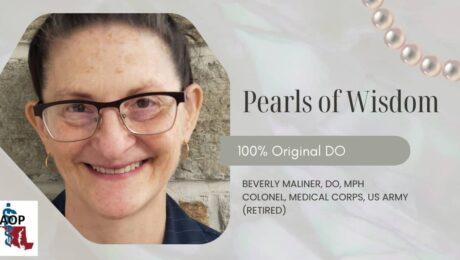
BEVERLY MALINER, DO, MPH
COLONEL, MEDICAL CORPS, US ARMY (RETIRED)
To help relax the patient’s torso, place a pillow or bolster under the knees when supine and under the shins when prone.
Credit: Jeff Kucine, DO and every massage therapist I’ve been to.
Heard from an old-timer (name unknown) at a long-ago AAO convocation about positioning a part of the body: “Fiddle and diddle until you get it right.” Works like a charm!
Very occasionally, an area treated with counterstrain will develop a hot spot or a cold spot. In my experience, they have been hot to touch and red and take about 12-24 hours to develop. They feel like places where energy flow is blocked and occur after powerful treatments. Fortunately, they are easily resolved in about 5 minutes by counterstrain of the spot.
Credit: Dr. Ed Stiles
In my experience, and for me, it’s often the small gems that truly stick with me and help me improve. Single lines or statements or brief experiences recalled and maybe buried into the longer presentation or casually thrown out during a conversation.
True trigger points are amazingly powerful. There are many approaches to resolving them. Their physiology and patterns are best described in the publications of Drs. Simons, Travell and Mense. I quote: “At present, the only way to make a definite diagnosis of a trigger point is by physical examination. …The ESSENTIAL first step is to learn how to recognize by palpation the nodule and taut band that are characteristic of a trigger point. …When active trigger points in any muscle fail to respond to treatment, with few exceptions, one or more perpetuating factors need to be identified and resolved.” They often cause radiating pain or paresthesia or cause functional inhibition or restrict normal muscle use. Three case studies:
- A massage therapist with many months of unresolved shoulder and arm pain with “nerviness” into her wrists had trigger points in both deltoids which, when pressed, radiated into her dorsal wrists. I dry-needled both which caused intense regional discomfort which resolved in a few minutes. Her pain was fully gone and both her work and prepping upcoming Thanksgiving meal were vastly more comfortable.
- A fellow presented to a Japanese style acupuncturist friend of mine unable to straighten his knee for 3 years following total knee replacement. Ted found and dry needled trigger points in the ipsilateral hamstrings and the client experienced full extension. (Japanese acupuncture incorporates tactile diagnosis and manual manipulations as well as meridian work.)
- One of my therapists habitually threw her neck and head around in an effort to create sensation after shunt placement for hydrocephalus. As a result, her neck hurt constantly despite her self help efforts and receiving massage. I assessed her seated in her office chair. Her surface posterior neck muscles were atonic (inhibited), a well-described consequence from active trigger points. I used counterstrain working my way deeper into her neck, about C5-6 on her right. Then I found a tiny nodule in a taut band in the intervertebral joint capsule. (Good thing for small diameter fingers!). Counterstrain with neuromuscular release (pressure on the nodule) followed by holding her head and neck in its restricted direction until the tissues let go and moved into full left rotation eliminated the nodule and markedly reduced her discomfort. She followed with deliberate efforts to break her habit and ongoing massage and is doing much better although not 100%.
The thing is, once we therapeutically engage with fascia and resetting reflexes, we have to abandon a lickety-split mentality. In exchange we get vastly more potent and longer-lasting results that more fully respect and leverage a person’s capacity to heal.
- Published in Pearls of Wisdom
QQ with Joyce Johnson

Joyce M. Johnson, DO, MA
Rear Admiral and Assistant Surgeon General, USPHS (ret)
Q: What’s something people would be surprised to know about you?
The reason I have so much energy is that I sleep a lot – at least 8 hours a night.
Q: How did you make your first dollar?
From around the age of 8 until I went to college, I had a vegetable stand at the end of our block. Our family had a large garden in our back yard, and I would sell the extra produce. I loaded the vegetables in my red wagon, wheeled it to the end of the block, put up a sign, and set up business. Pumpkins were the mainstay, but also included were other garden vegetables such as tomatoes and cucumbers.
Q: Name a place in the world you want to see.
I’ve been fortunate to have traveled and worked on every continent, and much of my work now focuses on the Arctic and Antarctic with the National Science Foundation.
The one place I would like to go is Komoto Island – I find the Komoto dragons fascinating. I was at the National Zoo in Washington, DC, during feeding time – one dragon ate a 5 pound raw roast in one bite!
Q: The best show you’ve binged in the last two years?
Rarely watch TV – don’t even have a show I watch regularly.
Q: How do you take your coffee? How many a day?
I rarely drink coffee, and when I do it’s always decaf. The tiniest bit of caffeine keeps me awake for a long time – I’m probably a slow metabolizer of caffeine. (Yes, that is a genetic variant.)
Q: If you could have a conversation with your younger self, what advice would you give?
To try to distinguish between what matters and what doesn’t. It’s not always easy to do, but there is a tendency to invest a lot of anxiety into things that don’t matter.
Q: What did you want to be when you were growing up?
First, I wanted to be ballerina but I had no aptitude for music or dancing, so I recognized that wasn’t realistic. (And that’s even before I realized how much practice and dedication it would take.) I went to college wanting to be a cooking teacher – but on the first day learned they didn’t have a home economics program. Thus, I became a bio major, then earned a master’s degree in hospital administration and finally went on to medical school.
I should add, though, that while a graduate student I was able to teach cooking to night students at the local community college. First, I taught European cooking. Then they needed someone to teach microwave cooking – when microwaves were still an expensive luxury item. They sent me to learn from Amana, the primary manufacturer at the time. The class was challenging to teach. The students were all women who hated to cook. Their husbands had just spent a fortune on the microwaves and had unrealistic expectations – they expected gourmet meals to “magically” happen in the microwave. The women had similar expectations, and didn’t want to do any cooking. One student complained vehemently when she had to cut the vegetables. Not a fun class. However, I was also sent to “crock pot” school so I could teach “Camping with a Crock Pot.” The idea was to assemble the dinner in the crock pot and to cook it while off in the woods. The class was fun but perhaps a little unrealistic. Plugging in a crock pot all day at a campsite can be challenging – the only outlet is often in the rest room. I’m not sure I’d want my crockpot in the rest room all day.
Years later, as a physician and Director of Health and Safety (“surgeon general”) of the U.S. Coast Guard, my culinary interests were useful. My job included responsibility for the Coast Guard’s cooks. One year, at a national joint-services meeting, I lectured on the “History and Science of Chocolate” that included the 100+ participants molding chocolate clay, cocoa painting on cookies, and making chocolate bowls with balloon molds. I still give a variation of that lecture today.
Q: Beach or mountain vacation?
Neither one. I prefer adventures. My favorite vacations have involved volunteer medical work in remote places – Philippines after a major typhoon, St. Croix, US Virgin Islands as a Red Cross disaster worker after two major hurricanes, Indonesia with Project Hope, etc. As a family we have gone on several DoCare missions to Guatemala and Peru.
On one family vacation to New Orleans, we stopped at Carville to visit the hospital for leprosy patients. It was a very large, very old building. The patients had adult-sized three-wheeled tricycles to go from place to place within the building. We spent a day with one of the patients who had been there for decades – he shared a lot of his life story with us. He was a remarkable person, who accepted his fate without anger. (My son often says, though not necessarily complaining, “While other kids were going to Disneyland on vacation, my parents took me to a leprosy hospital…”)
Q: Favorite or most-used app?
I use as few apps as possible – try to keep things simple.
Q: If you could have any superpower, what would it be?
I’d just be happy with a better memory.
Q: What’s the greatest lesson you’ve learned so far in your life?
To be grateful when I’m able to combine something fun with something worthwhile.
There’s value in being both a generalist and a specialist – in medicine and life in general.
Q: What’s the greatest challenge you’ve ever had to overcome?
To accept my limitations…and then to be grateful for all that I have.
Q: What would be your last meal?
It probably wouldn’t matter – I wouldn’t remember it for long afterwards anyway.
Q: If you listen to only one song for the rest of your life on repeat, what would it be?
My preference would be silence – no song at all.
Q: One thing you couldn’t live without?
In my travels to remote areas, I’ve lived without most everything. The most important thing is common sense – and some say I live without it a lot….
Q: Ideal weekend?
Having nothing that needs to be completed by Monday.
Q: What four qualities in a significant other matter most to you?
Honesty; deserving of trust; sense of humor; appreciates good food but willing to eat anything I cook.
Q: How long have you been involved with MAOP?
I’ve been involved with MAOP for as long as I can remember.
Q: Why is it important to you to be part of your state osteopathic medical association?
In Maryland the state osteopathic medical association is extremely important because there are so few DOs. And, with the two new schools, it will be even more important with the new students as they learn to integrate into the osteopathic profession.
- Published in Quick Questions
QQ with Beverly Maliner
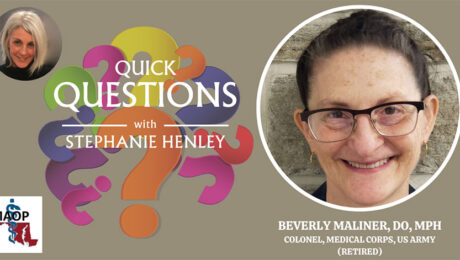
Beverly Maliner, DO, MPH
Colonel, Medical Corps, US Army (retired)
Q: What is your greatest pet peeve?
A: Two actually. One is being held hostage to IT crap that steals my time and tests my patience but does nothing I can tell that makes my work easier. Second is the term “common sense”. It implies that most people agree with what the speaker says and that there is common understanding about the issue or situation at hand and what the speaker thinks should be. It’s a very false heuristic that the speaker uses in lieu of clarity of thought and communication. And has been shown to not exist in most cases.
Q: What is your greatest lesson?
A: Be present at the table. And by table I do not mean the treatment table. I mean at the meeting table, in the organization, at the discussion, voting, and etc. Even when I seem to have nothing to contribute at that moment, being there creates recognition of my connection, gives me credibility to speak, and creates opportunity for me to speak.
Q: What is a skill that you struggle to learn?
A: Patient listening
Q: Who are your 3 biggest heroes?
A: Rosa Parks, my right upper extremity and my left upper extremity
Q: Name one place you want to see?
A: Aurora Borealis which I experienced in Alaska in 2011.
Q: Why is being part of MAOP important to you?
A: I want to be at the table (see above), I want to build connections and I want to stay informed.
- Published in Quick Questions
- 1
- 2