
Welcome Message from the Executive Director
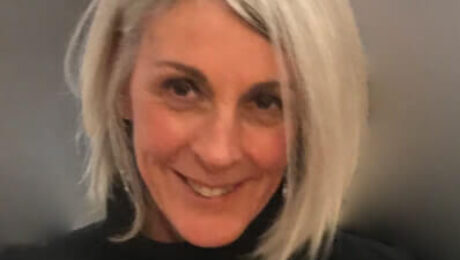
Dear Esteemed Colleagues,
It is my distinct pleasure to extend a warm welcome to each and every one of you to the official website of our esteemed Medical Society. Whether you are a long-standing member, a recent addition to our community or a visitor seeking information about our organization, we are delighted to have you here.
As the Executive Director, I am honored to lead an organization comprised of some of the most dedicated and accomplished professionals in the field of medicine. Our society stands as a beacon of excellence, driven by a collective commitment to advancing healthcare, promoting education and fostering collaboration among peers.
This website serves as a digital hub where you can access a wealth of resources, stay updated on the latest news and events and connect with fellow members from around the state and country. From informative articles and research publications to opportunities for professional development and networking, we are dedicated to providing you with the tools and support you need to thrive in your career.
Whether you are seeking information about upcoming conferences, exploring opportunities for volunteerism and advocacy or simply looking to engage with like-minded individuals who share your passion for medicine, you’ll find it all right here.
I encourage you to explore our website thoroughly, take advantage of the resources available to you and actively participate in the vibrant community that makes MAOP truly exceptional. Your contributions, insights and feedback are invaluable as we work together to shape the future of healthcare and make a positive impact on the lives of those we serve.
Thank you for being part of our MAOP family. Together, I am confident that we will continue to achieve great things and uphold the highest standards of excellence in our noble profession.
Warm Regards,
Stephanie Henley
Executive Director
Maryland Association of Osteopathic Physicians
- Published in News
QQ with Tyler Cymet
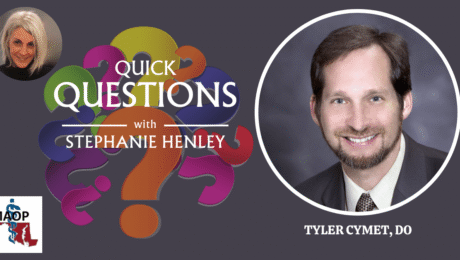
Tyler Cymet, DO
Q: How do you take your coffee?
Flavored, roasted or unroasted. Sunday is my Turkish dark boiled coffee or Saudi green unroasted coffee day. Every other day is more about quantity than quality with Keurig or hospital coffee filling the need.
Q: What would be your last meal?
Last meal? Shouldn’t be about the food, should be about the company. Although I’ve often thought that Chinese food is my soulmate so Chinese with Holly and Ilana so no one gets jealous.
Q: Favorite or most-used app?
I’ve been a google man since fellow Marylanders put the app out there, just after they changed the name to Google (from BackRub). Google Maps has about 4k of my photo’s with over 65 million views. Bing’s Chat GPT has been a guilty pleasure that I can see having a relationship with. And Yelp Elite for the past 7 years so there’s that.
Q: Name a place in the world you want to see.
Nebraska and Idaho!!! Been a goal of mine for years now. Having taught in every other state in America, I have to complete the set and meet with medical people from these last two states.
Q: What is your most memorable memory at MAOP?
MAOP at the beach. A few years after MAOP got going, DOs were procreating and looking to share their lives with friends and children. The meetings at the beach built bonds and shared experiences that have true value.
- Published in Quick Questions
QQ with Taisei Suzuki
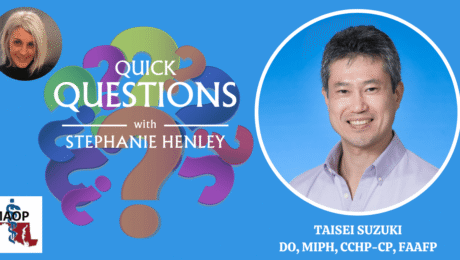
Taisei Suzuki (Mr.), DO, MIPH, CCHP-CP, FAAFP
Associate Program Director / OMM Site Director
Wright Center National Family Medicine Residency Program
Family Medicine
Unity Health Care, Washington D.C.
Adjunct Clinical Assistant Professor
A.T. Still University School of Osteopathic Medicine in Arizona
Q: What’s something people would be surprised to know about you?
TS: I was a vocalist for the University Jazz Band for one year when I attended University of Portland in Oregon. And, I sang in a Barbershop Chorus for nearly 6 years when I was in high school and college.
Q: What is your favorite thing about your job?
TS: Providing holistic high quality healthcare to the most vulnerable population in the cosmopolitan area using OMT and acupuncture treatments.
Q: What did you want to be when you were growing up?
TS: A flight attendant (still my dream job)
Q: Beach or mountain vacation?
TS: Beach!
Q: What’s the greatest challenge you’ve ever had to overcome?
TS: Learning English as a high school student when I came to the US as an exchange student
Q: What book do you always recommend to people?
TS: Touch of Life by Dr. Fulford!
Q: What is your favorite part of MAOP?
TS: Meeting wonderful osteopaths from the different parts of Maryland and learning about different specialties and how they incorporate Osteopathic Medicine into their practice.
- Published in Quick Questions
What is Osteopathy?
In the realm of healthcare, there exists a multitude of therapeutic approaches aimed at addressing various ailments and promoting holistic well-being. Osteopathy stands out as a distinctive and increasingly popular form of complementary medicine, garnering attention for its unique principles and methodologies. But what exactly is osteopathy, and how does it differ from conventional medical practices?
Osteopathy is a holistic approach to healthcare that emphasizes the interrelation between the body’s structure and its function. Developed in the late 19th century by Dr. Andrew Taylor Still, an American physician, osteopathy is founded on the principle that the body has an innate ability to heal itself when it is in a state of balance. Central to osteopathic philosophy is the belief that the musculoskeletal system plays a crucial role in maintaining overall health, and any disruption or dysfunction within this system can lead to a range of health issues.
At its core, osteopathy views the body as a dynamic unit where all parts are interconnected. Practitioners of osteopathy, known as osteopaths or osteopathic physicians, undergo rigorous training to assess and manipulate the musculoskeletal system to restore optimal function and alleviate pain. Unlike conventional medicine, which often focuses on treating symptoms, osteopathy seeks to identify and address the root cause of a patient’s condition.
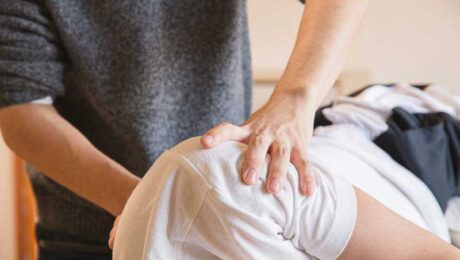
One of the fundamental principles of osteopathy is the concept of “osteopathic manipulation.” This hands-on approach involves various techniques, such as stretching, massaging, and applying gentle pressure to the muscles, joints, and tissues. Osteopaths use their hands to diagnose and treat dysfunctions, aiming to improve mobility, reduce pain, and enhance the body’s natural healing mechanisms.
Moreover, osteopathy encompasses a holistic perspective that considers not only the physical but also the emotional and environmental factors that influence health. Osteopathic practitioners take into account the patient’s lifestyle, diet, stress levels, and other aspects of their well-being when formulating a treatment plan. By addressing these interconnected aspects, osteopathy aims to promote overall health and prevent future health problems.
Osteopathy is commonly used to treat a wide range of conditions, including back pain, neck pain, joint pain, headaches, and sports injuries. However, its scope extends beyond musculoskeletal issues to encompass various systemic conditions, such as digestive disorders, respiratory problems, and menstrual irregularities. Osteopathic treatment is tailored to the individual needs of each patient, with a focus on restoring balance and optimizing function.
Furthermore, osteopathy emphasizes the importance of patient education and empowerment. Osteopathic practitioners work collaboratively with their patients to develop personalized treatment plans and empower them to take an active role in their health and well-being. Through education, lifestyle modifications, and self-care strategies, patients can optimize their health and prevent future health problems.
In recent years, osteopathy has gained recognition and acceptance within mainstream healthcare systems worldwide. Many people seek out osteopathic treatment as a complementary approach to conventional medical care, finding relief from chronic pain and improved overall health and well-being.
In conclusion, osteopathy is a holistic approach to healthcare that recognizes the interconnectedness of the body’s structure and function. By addressing musculoskeletal imbalances and considering the whole person, osteopathic practitioners aim to restore health and promote well-being. With its focus on hands-on manipulation, patient-centered care, and holistic principles, osteopathy offers a unique and valuable perspective in the field of healthcare.
- Published in Osteopathy
Hello world!
Welcome to WorkPlace Sites. This is your first post. Edit or delete it, then start writing!
- Published in Uncategorized
- 1
- 2